We’ve all heard the old adage “heat rises.” But what’s less understood is the unique science behind this effect. If you’ve ever noticed that the main floor of your home feels colder than the upper levels, or that there’s a persistent chill near the floor even when the thermostat is set high, there’s a specific reason for it. It’s called the stack effect, and it’s one of the less talked-about causes of heat loss and discomfort in Manitoba homes.
How the Stack Effect Works
So, we know that warm air rises—what are the implications of this phenomenon inside a home? It means heated air moves upward through the building and looks for any opening to escape, typically through attic penetrations, ceiling light fixtures, gaps around plumbing stacks, or poorly sealed attic hatches.
As that warm air exits at the top, it creates a pressure difference that pulls cold outdoor air in at the bottom. Sill plates, rim joists, electrical penetrations at the foundation level, and gaps around basement windows are all common entry points. The result is a continuous loop: warm air out the top, cold air in at the bottom, and a furnace working overtime to compensate.
In a Manitoba winter, the stack effect is more pronounced because the temperature difference between indoors and outdoors is so dramatic. The greater that gap, the stronger the pressure differential, and the faster the cycle runs.
Why Standard Gretna Insulation Doesn’t Fully Solve It
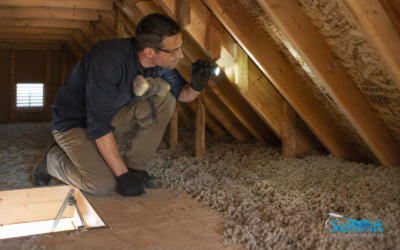
Batt insulation addresses heat transfer through conduction but doesn’t stop air movement. A well-insulated attic floor won’t prevent warm air from escaping through gaps around a plumbing stack or attic hatch if those openings aren’t sealed.
Stopping the stack effect requires air sealing at both ends of the building envelope: the top, where warm air tries to exit, and the bottom, where cold air enters. Rim joists and sill plates are the most common entry points at the lower level, and they’re frequently uninsulated or treated with materials that have degraded over time.
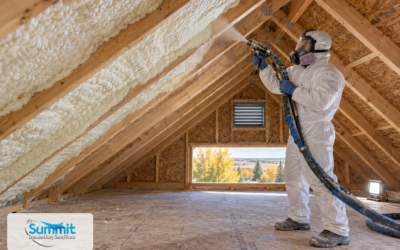
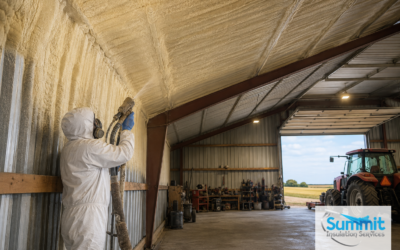
In Gretna, spray foam is well-suited to this because it addresses insulation and air sealing together. Applied to rim joists and sill plates, it fills the irregular gaps left by batt insulation. At the upper level, spray foam around penetrations in the attic floor closes the pathways that let warm air to escape and drive the pressure difference.
Reducing Stack Effect Heat Loss in Your Manitoba Home
If your home has cold floors, persistent drafts at the lower level, or rooms that never seem to warm up properly, the stack effect may be a significant part of the problem. An assessment can identify where air is entering and exiting, and what sealing would have the most impact before next heating season.
Call now to book yours.