A metal farm shop may look straightforward from the outside: steel panels, a large overhead door, and enough open floor space for machinery and repairs. From an insulation standpoint, however, it is a collection of seams, transitions, fasteners, openings, and broad surfaces that can move heat quickly.
Around Gretna, Altona, Winkler, Morris, Morden, and Emerson, that matters when late-summer work gives way to cold prairie weather. A shop that leaks air can be difficult to heat evenly, especially near the floor and around exterior walls. Warm, moist indoor air can also reach cold metal surfaces, creating conditions where condensation may develop.
Spray foam insulation can address many of these weak points because it conforms to irregular surfaces and combines thermal resistance with air sealing. The key is deciding where it will make the biggest difference and planning the entire building assembly, not simply spraying every visible panel.
Why Metal Farm Shops Lose Heat Differently
Metal conducts heat readily, and farm-shop shells often contain long joints where roof and wall panels meet. The structure may also include steel framing, wood girts, service penetrations, ridge details, eaves, windows, and one or more large doors. Each transition creates an opportunity for unwanted air movement or a cold surface.
Conventional insulation can slow heat flow when it is installed continuously, but gaps around framing and penetrations still matter. In a working agricultural building, those small gaps add up across a large roof and wall area. A useful insulation plan begins by identifying the main leakage paths.
1. The Roof Deck, Ridge, and Eaves
The roof is a major part of a shop’s thermal boundary. Warm air rises toward the roofline, where it can escape through joints, ridge details, or gaps at the eaves. If heated indoor air reaches cold metal, moisture can condense on the underside of the roof and drip onto equipment, benches, or stored materials.
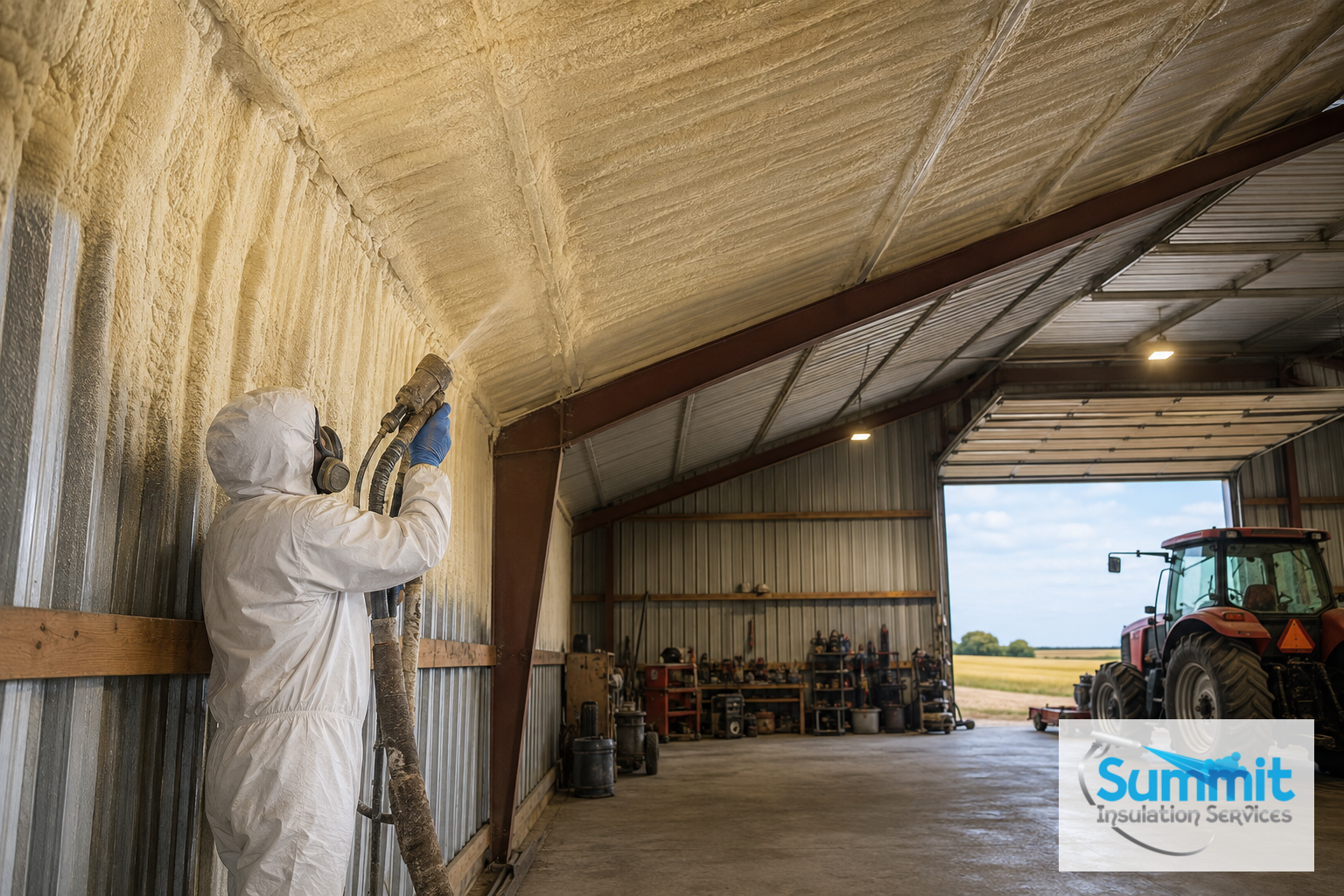
Closed-cell spray foam is often considered for the underside of metal roof assemblies because it adheres to the substrate and creates continuous coverage across corrugations and seams. The roof condition, surface preparation, desired thermal performance, and ventilation strategy should all be assessed before installation.
2. Wall Panels and Framing Transitions
Long wall runs may appear tight while still leaking at panel laps, corners, sill transitions, and the places where steel and wood framing meet. These details can be especially noticeable on windy days, when outdoor air is pushed through openings that are hard to spot from inside the shop.
Spray foam can follow the profile of metal panels and seal around irregular framing. For an existing shop, the installer also needs to work around wiring, shelving, windows, and other fixed features. A clear work area and an agreed plan for which surfaces remain accessible can make the project easier to complete consistently.
3. Overhead Doors and Their Perimeters
Large overhead doors are necessary for farm equipment, but they interrupt the insulated wall and can become a major source of heat loss. The door panels may need their own insulation strategy, while worn weather seals can allow cold air to enter around the sides, header, or threshold.
Spray foam can help seal the framed opening around the door, but it does not replace a properly adjusted door or functioning perimeter seals. Treat the door and surrounding wall as one system: insulate the fixed assembly, then inspect the moving parts and weatherstripping for gaps.
4. Service Penetrations
Electrical conduit, plumbing, exhaust ducts, vents, and equipment connections all pass through the building envelope. Even a small opening can become a persistent draft or allow warm indoor air to reach a cold cavity.
These areas require careful detailing. Combustion equipment, heat-producing fixtures, chimneys, and exhaust systems may need specific clearances or non-combustible materials. A professional assessment should identify which penetrations can be sealed with spray foam and which require another approved approach.
5. The Wall-to-Foundation Connection
Cold air often enters where the wall meets the slab, grade beam, or foundation. Because this transition sits near floor level, leakage can create the familiar problem of a shop that feels cold around your boots even while warm air gathers overhead.
Sealing accessible gaps at the base of the wall can improve the continuity of the air barrier. Existing moisture entry or drainage problems should be corrected first; insulation is not a substitute for repairing leaks or managing water around the building.
Why Closed-Cell Spray Foam Often Fits Metal Buildings
Summit Insulation Services provides closed-cell spray foam for residential, commercial, and agricultural applications. Its dense, rigid structure offers thermal resistance, moisture resistance, and air-sealing performance in one material. That combination can be useful where metal panels, corrugations, and framing create a surface that is difficult to cover continuously with rigid or batt products.
The right product and assembly still depend on how the building is used. A machinery storage building, heated repair shop, livestock space, and wash area create different levels of heat and moisture. Surface condition, interior finishes, ignition or thermal barriers, and local requirements may also affect the scope. Those details should be confirmed for the specific project before publication or installation.
A Tighter Shop Still Needs Planned Ventilation
Air sealing reduces uncontrolled leakage; it does not remove the need for fresh air or exhaust. Welding fumes, engine exhaust, solvents, dust, combustion appliances, and moisture from snow-covered equipment all need to be managed appropriately. After tightening the building envelope, review ventilation and exhaust equipment so the shop can operate safely and comfortably for its intended use.
Plan the Work Before Heating Season
Late summer and early fall are practical times to look at a farm-shop insulation project. The building is easier to inspect before winter exposes every draft, and equipment or stored materials can be moved to create access. It also gives the installer time to identify roof leaks, damaged panels, door-seal problems, and ventilation questions that should be resolved before foam is applied.
Start with the areas you can feel or see, but do not stop there. A complete assessment should consider the roofline, walls, doors, penetrations, and foundation connection together. That is how you avoid improving one surface while leaving a major leakage path beside it.
Talk to Summit About Your Metal Farm Shop
If your shop is difficult to heat, develops condensation on metal surfaces, or feels drafty around doors and floor level, the building envelope may need attention. Summit Insulation Services is based in Gretna and serves agricultural customers in nearby southern Manitoba communities, including Altona, Winkler, Morris, Morden, and Emerson.
Request a quote to discuss where spray foam insulation could improve your farm shop’s air sealing, thermal performance, and year-round usability.