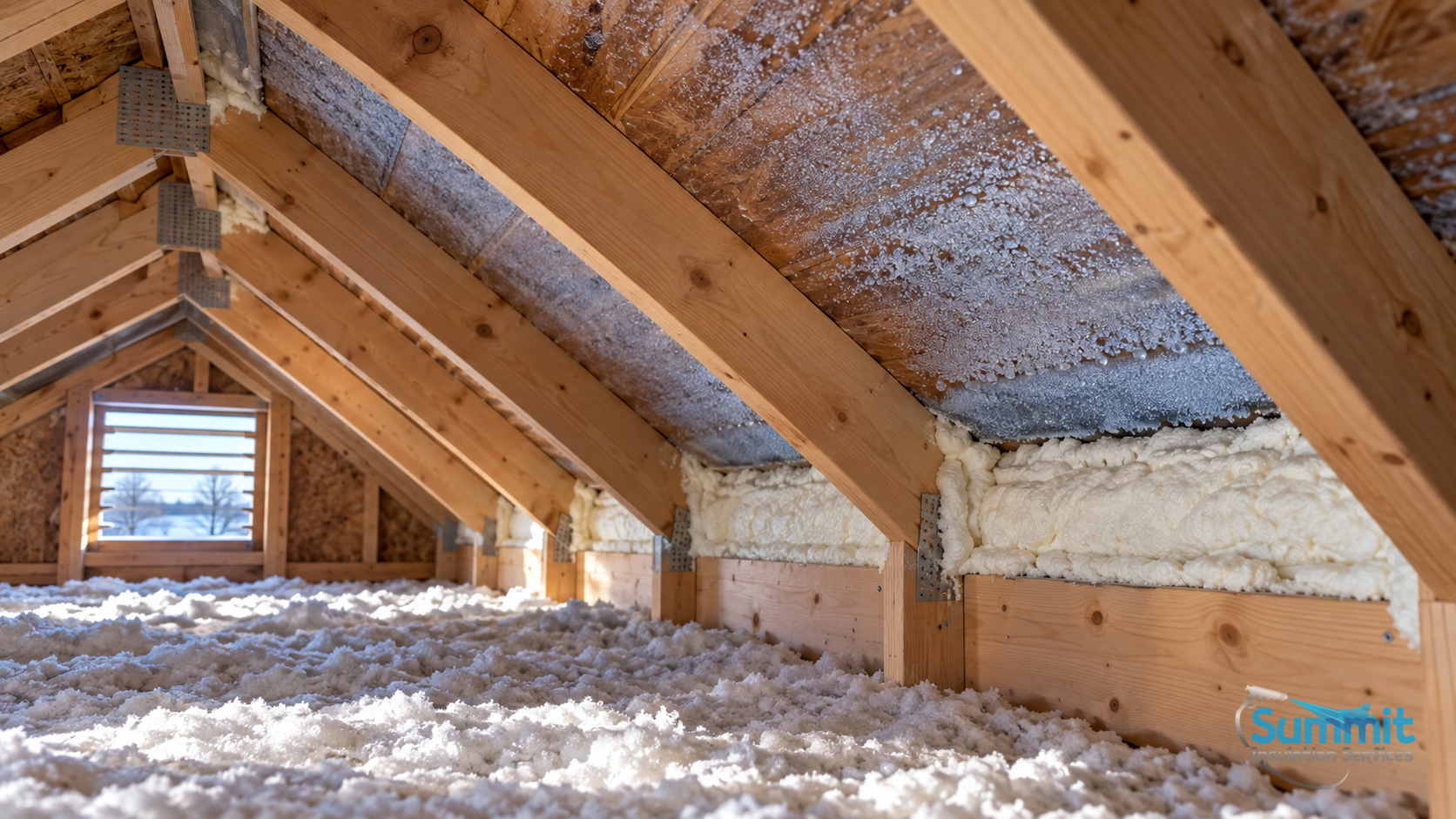
Attic frost forms when warm, moisture-carrying indoor air reaches a cold surface inside the attic and freezes. In Gretna, that can happen quickly once winter settles in. A light dusting may disappear during a mild spell, but repeated or heavy frost can wet insulation and roof framing when it melts. The practical goal is not simply to add more insulation. It is to control the air paths that carry heat and moisture into the attic in the first place.
Spray foam insulation can be part of that solution because it can insulate and air seal at the same time. However, the right approach depends on how the attic and roof assembly are designed. Roof leaks, indoor humidity, bathroom fan ducts, and attic ventilation may also need attention.
Why Attic Frost Forms in Manitoba Homes
Warm air inside a home can hold water vapour from showers, cooking, laundry, plants, and everyday living. During cold weather, pressure differences encourage that air to move upward through openings in the ceiling. When it reaches the underside of a cold roof deck, the moisture can condense and freeze.
Common leakage routes include attic hatches, gaps around wiring and plumbing stacks, unsealed wall tops, recessed fixtures, and the housings or ducts connected to exhaust fans. Even an attic with plenty of insulation can develop frost if those air paths remain open.
Attic Frost Is Often a Condensation Problem
Frost in an attic does not automatically mean the roof is leaking. A roof leak usually follows rain, melting snow, or a specific weather event and may leave a concentrated stain. Condensation-related frost is more likely to appear during sustained cold weather and may be spread across roof sheathing, nails, or framing.
The distinction matters because the repairs are different. Replacing shingles will not stop moist indoor air from escaping through the ceiling, while air sealing will not repair damaged flashing or an active roof leak. A proper inspection should look at the pattern, timing, and likely moisture source before recommending insulation work.
How Spray Foam Can Reduce the Risk of Attic Frost
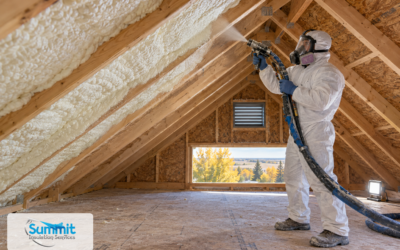
Spray foam expands and adheres to the surfaces where it is applied. In suitable locations, that makes it useful for sealing irregular joints and penetrations that are difficult to treat with batt or loose-fill insulation alone.
Depending on the attic design, a professional may use spray foam to address specific leakage points at the attic floor or to create a continuous insulated assembly along the roofline. The important result is continuity: the air-control layer should not stop at a plumbing penetration, attic hatch, framing joint, or other opening.
When warm indoor air is kept out of the cold attic, less moisture reaches the roof deck. The insulation layer also helps control surface temperatures. Together, those effects can reduce the conditions that allow attic frost to form.
Two Attic Strategies Require Different Plans
Most existing homes have a vented attic, with insulation and air sealing at the ceiling level while outdoor air moves through soffit and roof vents above. In other assemblies, insulation may be installed along the roofline so the attic becomes part of the conditioned space.
These are not interchangeable details. Blocking existing ventilation without redesigning the assembly can create new moisture problems, and spraying over wet or damaged materials can hide rather than solve the cause. The location, foam type, thickness, fire protection, ventilation, and surrounding materials all need to be considered as one system.
That is why attic spray foam is best planned after the existing roof, ventilation path, insulation, mechanical ducts, and moisture conditions have been assessed.
Warning Signs to Check Before the First Deep Freeze
October is a useful time to look for clues because repairs are easier to plan before the coldest weather arrives. From the living space, watch for:
- water stains or peeling paint near ceilings and exterior walls
- a musty smell that seems stronger after a thaw
- cold drafts around an attic hatch or ceiling fixtures
- bathroom fans that are weak, noisy, or slow to clear humidity
- rooms that stay noticeably colder than the rest of the home
- a history of winter dripping from ceiling vents or fan grilles
If the attic can be viewed safely without disturbing insulation, also note darkened roof sheathing, rusty nail tips, damp insulation, disconnected exhaust ducts, or frost concentrated around penetrations. Do not walk between framing members, disturb electrical components, or move unfamiliar insulation. Older loose vermiculite insulation may contain asbestos and should be left undisturbed pending professional advice.
What Spray Foam Cannot Fix by Itself
Spray foam is not a substitute for repairing an active roof leak, reconnecting a bathroom exhaust duct, managing unusually high indoor humidity, or correcting blocked roof ventilation in a vented attic. It should also not be applied to wet, dirty, or unsuitable surfaces simply to cover a symptom.
A complete solution may include targeted air sealing, appropriate insulation, weatherstripping at the attic hatch, insulated and properly terminated exhaust ducts, roof repairs, or ventilation and humidity adjustments. The sequence matters: identify the moisture source first, repair damaged materials where necessary, and then complete the insulation and air-control work.
What to Do If You Find Attic Frost
- Document the location and extent with photos if you can do so safely.
- Check whether bathroom and kitchen exhaust systems terminate outdoors rather than into the attic.
- Avoid scraping frost or soaking up meltwater in a way that disturbs insulation or wiring.
- Arrange an assessment that considers air leakage, insulation, ventilation, roof condition, and indoor humidity together.
- Ask which part of the assembly will be insulated and air sealed, and how existing ventilation will be handled.
Plan Before Manitoba Winter Exposes the Weak Spots
Attic frost is easier to prevent than to discover after a midwinter thaw has soaked the insulation below. A fall assessment can identify ceiling leaks, duct problems, and insulation gaps while there is still time to plan the work carefully.
For homeowners in Gretna and the surrounding area, Summit Insulation Services can assess whether spray foam is appropriate for the attic assembly and explain where air sealing may make the biggest difference. A good recommendation should address the cause of the moisture, preserve the intended roof design, and fit the way the home is actually built.
A Drier Attic Starts With Better Control of Air and Moisture
Attic frost is a warning that warm, moist air is reaching a surface cold enough to freeze it. Spray foam insulation can help by closing leakage paths and strengthening the thermal boundary, but it works best as part of a complete moisture-control plan. If you have seen attic frost, ceiling stains, winter drips, or damp insulation, contact Summit Insulation Services to arrange an assessment before the next stretch of deep cold.