A cool September morning can reveal a problem that stayed hidden through summer: beads of water on the inside of a metal roof or wall. Farm owners often describe this as a building that “sweats.” It may show up above machinery, near fasteners, or along roof purlins as outdoor temperatures begin to swing between warm afternoons and cool nights.
Condensation is not only inconvenient. Repeated wetting can contribute to corrosion, damp stored materials, slippery floors, and an uncomfortable workspace. Understanding why it happens is the first step toward choosing an insulation plan that fits a Southern Manitoba farm building.
Why Condensation Forms on Metal
Metal changes temperature quickly. When warm, moisture-laden indoor air reaches a metal surface that is cold enough, some of that moisture condenses into liquid water. Activities inside the building can add humidity, including washing equipment, melting snow from vehicles, unvented heating, animals, or simply opening large doors during changing weather.
The amount of water depends on indoor humidity, outdoor conditions, ventilation, and the temperature of the steel. That is why one shop may drip heavily while another building nearby stays dry.
Why Gaps in the Insulation Layer Matter
Insulation works best when it is continuous. If warm indoor air can travel around a batt or through an open seam, it may still reach cold steel and condense behind the insulation. That hidden moisture can be difficult to spot until staining, odours, or corrosion appear.
Metal buildings also contain ribs, fasteners, girts, purlins, corners, and roof-to-wall junctions. These details make a complete fit important. Simply adding more material does not solve the problem if air can bypass it.
How Closed-Cell Spray Foam Fits the Assembly
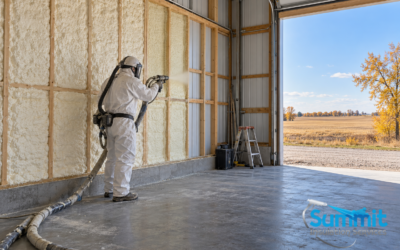
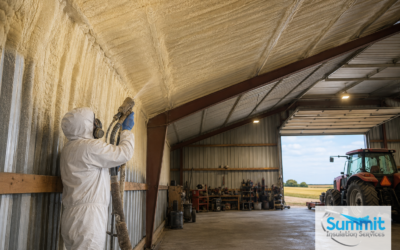
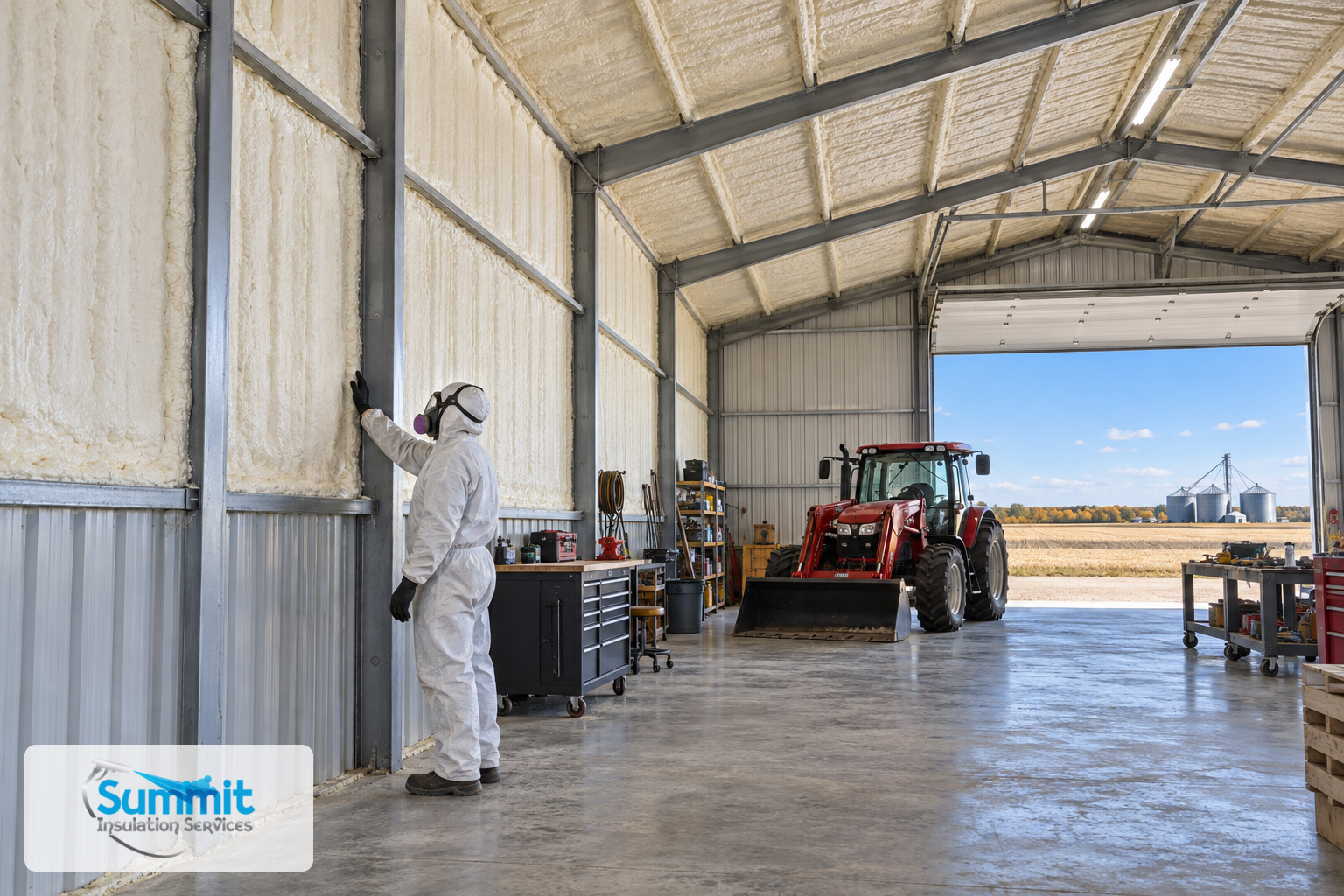
Closed-cell spray foam is dense and rigid. When it is applied directly and continuously to a suitable metal substrate, it can help insulate the steel and restrict indoor air from contacting the cold surface. Its moisture resistance is also useful in buildings that experience demanding seasonal conditions.
The result is not based on foam alone. Good performance depends on suitable surface preparation, correct product selection, consistent application, and attention to transitions and penetrations. Ventilation and humidity control may still be required for the way the shop is used.
Four Areas That Deserve Extra Attention
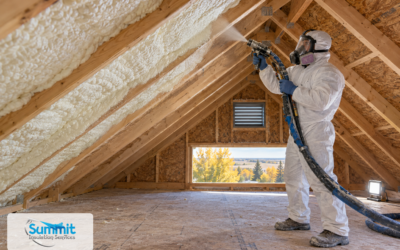
Roof deck and purlins: Warm air rises, so the underside of the roof is often the first place condensation becomes visible. Continuous coverage around framing members helps reduce pathways to cold steel.
Wall-to-roof junctions: Small openings at eaves, corners, and transitions can allow significant air movement. These details should be planned as part of the overall envelope.
Doors, windows, and service penetrations: Large overhead doors interrupt the insulation layer, while wiring, vents, and piping create smaller breaks. Seals and transitions need to work with the spray foam rather than against it.
Slab and lower-wall conditions: Water near the base of a wall may come from drainage, snowmelt, washing, or ground moisture. Those sources need to be identified instead of being mistaken for roof condensation.
Questions to Answer Before the Crew Arrives
What will the building be used for? A heated repair shop, cold storage building, livestock area, and occasional-use machinery shed have different temperature, moisture, ventilation, and finish requirements.
Is the steel clean, dry, and sound? Active roof leaks, surface contamination, loose coatings, and corrosion may need attention before foam is applied.
What interior finish is planned? Some uses and assemblies may require a protective coating, ignition barrier, thermal barrier, or other finish over spray foam. The project team should confirm applicable requirements for the building and its occupancy.
Where will moisture go? Insulation reduces heat flow and air movement, but it does not replace roof drainage, site grading, mechanical ventilation, or humidity control. A durable plan considers all of these together.
Is September a Good Time to Plan the Work?
Early fall gives owners a chance to inspect the building during cooler mornings and notice where condensation begins. It also creates time to repair leaks, move equipment, clean surfaces, and coordinate any electrical or ventilation work before winter operation becomes the priority.
Application conditions still matter, and the installer should confirm that the substrate and site are suitable for the selected product. Planning early makes those details easier to manage.
Build a Better-Performing Farm Shop
A metal building does not have to feel damp in fall and difficult to heat in winter. With a well-planned insulation and air-sealing approach, a farm shop can become a more stable place for equipment, stored materials, and day-to-day work.
Summit Insulation Services works on agricultural, commercial, and residential projects in Gretna, Altona, Winkler, Morden, Morris, Emerson, and surrounding areas. Contact the team to discuss your metal building, how you use it, and the areas where condensation or cold air are showing up.