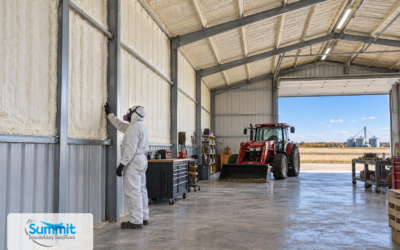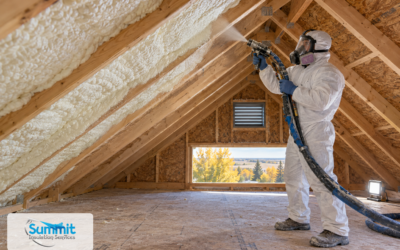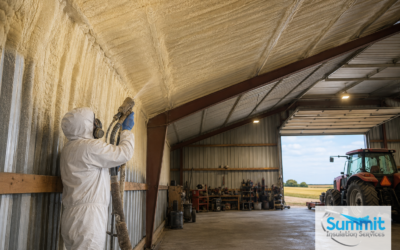
October has a way of shortening the to-do list in southern Manitoba. Harvest is wrapping up, overnight temperatures are dropping, and any workshop project that felt optional in August can suddenly feel urgent. If your garage, machinery shop, or farm outbuilding is difficult to heat, drafty around the walls, or prone to condensation, the building envelope may be the place to start.
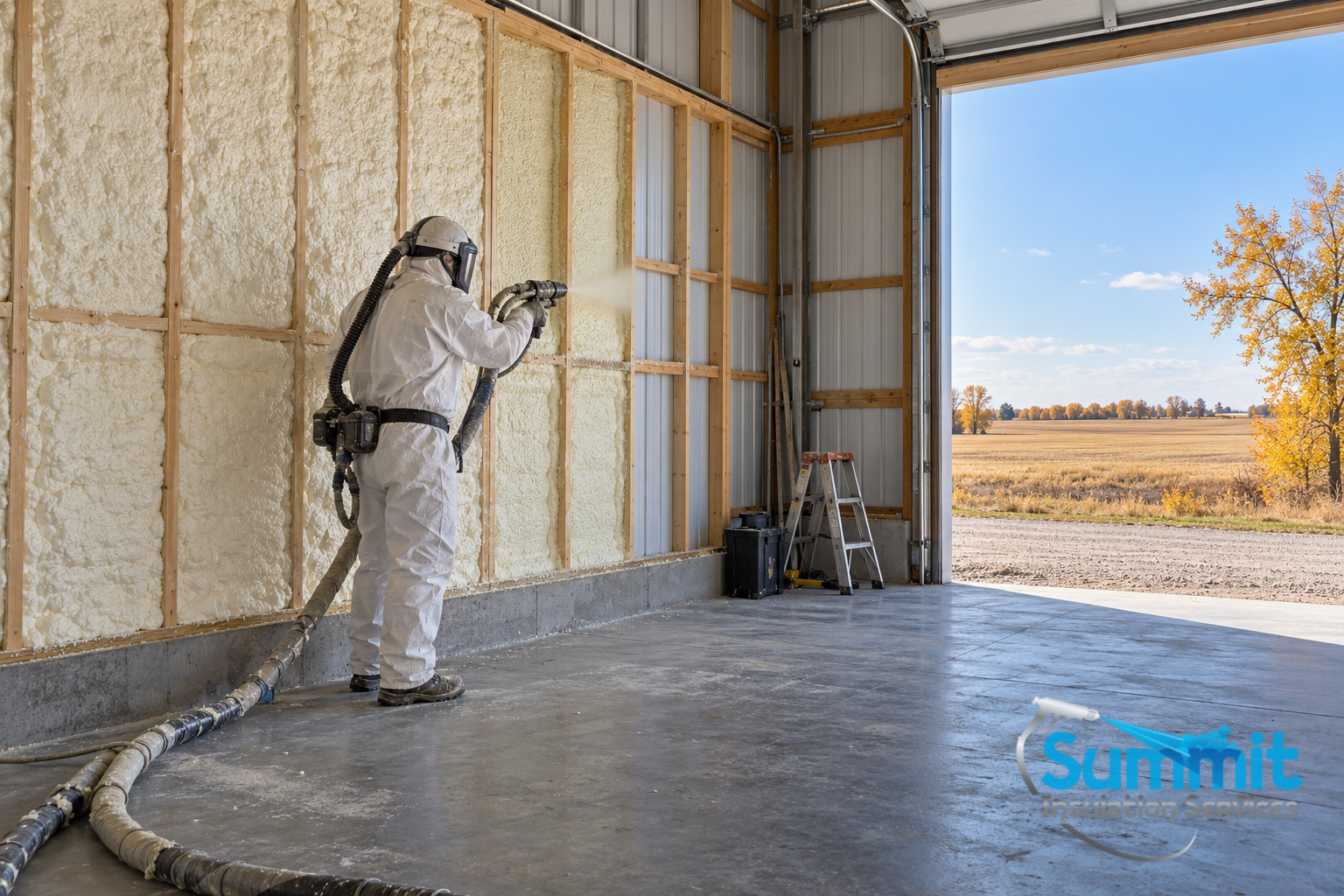
Spray foam insulation can be a practical fit for these spaces because it insulates and air seals in one application. For property owners in Gretna, Altona, Winkler, Morden, Morris, Emerson, and nearby communities, fall is a useful time to assess where heat may escape before the coldest weather arrives.
Why Workshops Can Be Hard to Heat
Workshops and outbuildings often behave differently from houses. They may have large overhead doors, long wall runs, exposed roof decks, service penetrations, and metal components that readily transfer heat. Even when a heater is adequately sized, small gaps at framing connections and around openings can let warmed air leave the building while cold outdoor air moves in.
That air movement affects more than comfort. A shop that warms slowly or loses heat quickly can make winter work less pleasant and place more demand on heating equipment. When warm, moisture-laden indoor air reaches a cold surface, condensation or frost may also appear. Insulation alone cannot correct every moisture source, but a well-planned air-sealing strategy can be an important part of the solution.
What Spray Foam Brings to the Building Envelope
Unlike materials that must be cut and fitted around every framing member, spray foam expands into irregular spaces and adheres to the surface where it is applied. This can create a more continuous insulation layer across the walls or roofline and reduce the small air pathways that are easy to miss in a large building.
Closed-cell spray foam is dense and rigid, with strong thermal and moisture-resistance characteristics. Those qualities often make it worth considering for metal buildings, agricultural structures, and other demanding applications. Open-cell spray foam is lighter and more flexible and may suit sound-control goals or certain hard-to-reach areas. The right product and thickness depend on the assembly, how the space will be used, and the conditions the insulation will face.
Five Signs Your Shop Deserves a Closer Look
- The temperature falls quickly after the heater shuts off.
- You can feel drafts near wall-to-roof connections, corners, or penetrations.
- Frost or condensation shows up on metal panels, fasteners, or framing.
- Some work areas stay noticeably colder than others.
- The heating system runs frequently without creating steady comfort.
These symptoms do not automatically point to one fix. Door seals, ventilation, drainage, heating design, and existing insulation may all play a role. A site assessment helps separate obvious air leaks from larger building-envelope issues and keeps the recommendation focused on how the shop actually operates.
Where an Assessment Usually Starts
The roof or ceiling deserves early attention because it represents a large part of the enclosure and contains many potential transitions. Exterior walls, corners, and the junction between walls and the roof are also common priorities. Around overhead doors, man doors, windows, wiring, plumbing, and exhaust penetrations, the goal is to identify gaps while preserving the function of moving parts and required ventilation.
The lower portion of the building matters too. Foundation transitions, sill areas, and slab edges can contribute to cold surfaces and drafts. Some of these details may call for spray foam, while others need compatible sealants, repairs, or a different insulation approach. Looking at the entire enclosure prevents one upgraded area from being treated as the answer to every problem.
Plan the Space You Need, Not Just the Insulation
Before work begins, be clear about the shop’s purpose. A building heated occasionally for equipment repairs has different needs from a workshop occupied every weekday. Storage conditions, wash-down activities, welding or engine exhaust, livestock use, and indoor humidity can all affect the insulation and ventilation plan.
Interior finishes and fire-protection requirements also need to be considered as part of the assembly. Product selection, application conditions, and any required protective covering should be confirmed for the specific building and local requirements. Professional installation matters because spray foam performance depends on substrate preparation, application technique, and attention to transitions and penetrations.
Why October Is a Smart Time to Start the Conversation
October makes existing problems easier to notice: cold mornings reveal drafts, changing temperatures can expose condensation, and winter heating plans are no longer theoretical. An assessment now gives you time to define the scope, prepare the space, and coordinate around farm or business schedules. Installation timing will depend on project conditions and product requirements.
Get Your Workshop Ready for Winter
Summit Insulation Services provides spray foam insulation for residential, commercial, and agricultural properties in Gretna and nearby southern Manitoba communities. If your garage, farm shop, or outbuilding is difficult to heat, contact Summit to discuss the space and request a quote.